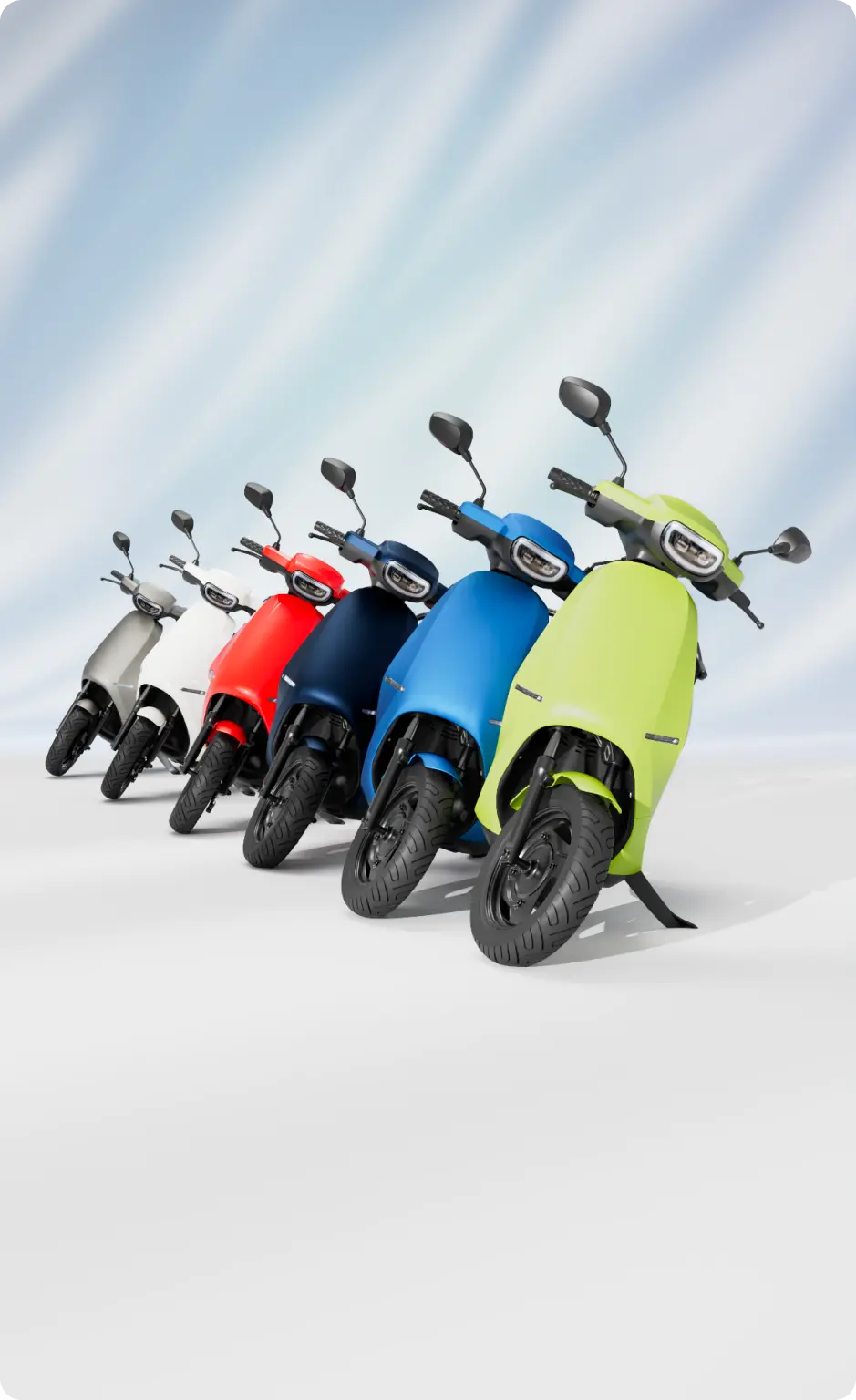
In a rapidly evolving electric vehicle (EV) market, Ola Electric Mobility Ltd. has emerged as a key player, shaping the future of clean transportation in India. With the recent launch of its groundbreaking Ola Digital Twin platform, Ola Electric is redefining manufacturing processes and product development cycles, leveraging cutting-edge technologies to stay ahead in the race.
The company’s innovation, built on NVIDIA’s powerful Omniverse platform, is a testament to Ola’s commitment to pushing the boundaries of what’s possible in EV manufacturing and operations. This blog delves into the impact of the Digital Twin platform on the company’s production capabilities, operational efficiency, and its broader role in India’s EV landscape.
What is the Ola Digital Twin Platform?
The Ola Digital Twin is a comprehensive virtual platform that integrates Krutrim AI, NVIDIA technologies, IoT, and advanced simulation tools to create digital replicas of Ola Electric’s manufacturing environment. This digital twin enables Ola to simulate, optimize, and fast-track everything from equipment layouts to product development cycles — all within a virtual space.
By employing generative AI and physically accurate simulations, the platform allows for the real-time testing of processes, reducing the need for extensive physical trials. Tasks like kinematic simulations, robotic arm training, and synthetic data generation for autonomous mobile robots (AMRs) are all conducted in virtual environments, significantly cutting down production times and costs.
This integration helps Ola achieve a 20% faster time-to-market for its products and processes. For an EV company striving to stay competitive and meet growing demand, this kind of innovation could prove to be a game-changer.
How Ola is Using the Digital Twin Platform
The Ola Digital Twin platform is already being used at Ola Electric’s Future Factory, one of the largest two-wheeler EV manufacturing facilities globally. Ola leverages this virtual platform to simulate complex manufacturing processes, such as robotic welding lines and quality inspection systems, before implementing them in the physical factory. This virtual deployment ensures that changes can be tested and optimized in advance, reducing errors, improving efficiency, and minimizing downtime.
Additionally, the platform’s generative AI capabilities help create synthetic assets like lighting, environmental scenes, and even product defects. This enables faster and more accurate training of perception AI models, cutting down model training time from months to mere weeks. The ability to simulate scenarios that are difficult or impossible to replicate in real-world conditions provides Ola with an invaluable tool for continuous improvement in manufacturing.
In the realm of retail and logistics, Ola Consumer is using NVIDIA Isaac Sim to simulate and train robots for stock-keeping and pick-and-place operations in its automated dark stores. This allows Ola to enhance its automated retail operations, improving the efficiency of its supply chain and product delivery systems.
Impact on Ola’s Manufacturing Ecosystem
Ola Electric’s ambitions extend far beyond manufacturing EVs. The Ola Digital Twin platform plays a key role in the company’s expansion plans, particularly in the development of its EV hub in Tamil Nadu. This hub, which includes the Ola Future Factory and the upcoming Ola Gigafactory, is set to become the cornerstone of Ola’s EV production ecosystem. The digital twin technology will help Ola optimize these new facilities right from the design stage, ensuring that the physical space is as efficient as possible.
Additionally, Ola’s Bengaluru-based Battery Innovation Centre (BIC), which focuses on advanced battery cell technology, will also benefit from these cutting-edge simulations. Ola aims to optimize its cell manufacturing processes and equipment layouts, driving further innovation in battery technology.
Why Investors Should Keep an Eye on Ola Electric
While Ola Electric is India’s largest pureplay EV manufacturer, it still faces significant financial challenges. In Q1 FY25, the company reported a net loss of ₹347 crore despite net sales of ₹1,644 crore. However, its market cap of over ₹35,000 crore signals strong investor interest, especially as the company continues to lead the charge in India’s EV market. Hyundai Motor Company’s 2.47% stake in Ola Electric further underlines the global confidence in the company’s future.
With the Digital Twin platform, Ola is positioning itself not just as a manufacturer but as a tech-driven innovator in the EV space. This technological advantage is likely to provide a long-term edge, enhancing manufacturing efficiencies, lowering costs, and improving time-to-market for new products.
Ola Electric’s Digital Twin platform is more than just a technological advancement — it represents a shift towards smarter, faster, and more efficient EV manufacturing. By integrating advanced AI and simulation tools into its production processes, Ola is setting a new standard for EV companies in India and beyond.
As the EV market continues to grow, companies like Ola Electric that prioritize innovation and efficiency will likely lead the way. Investors looking for opportunities in the booming EV sector should keep a close watch on Ola Electric, as it continues to drive transformative change in the industry.
Disclaimer: The information provided in this blog is for informational purposes only and does not constitute financial or investment advice. Readers are encouraged to conduct their own research or consult with a financial advisor before making any investment decisions. The author is not responsible for any investment losses or decisions made based on this information.
Leave a Reply